Is Sleep Training Bad? A Gentle, Research-Based Look at Crying, Cortisol, and Attachment
If you are here, chances are you have wondered something many loving parents ask:
Is sleep training bad?
This question comes up so often, and honestly, it makes sense. When you are already exhausted and trying to make the best decision for your baby, it is hard to ignore the fear-based messages blasted all over social media. Parents are told that sleep training is harmful, that crying automatically causes attachment issues, or that any stress at bedtime must mean something is going wrong. But the full picture is much more nuanced than that!
The research we have does NOT show that developmentally appropriate behavioral sleep interventions harm attachment, emotional development, or the parent-child relationship when they are carried out thoughtfully and safely. In fact, studies have found that these approaches can improve infant sleep and parental mental health, with no evidence of long-term harm to attachment or later emotional and behavioral outcomes.
As a sleep consultant, I also want to say this clearly: supporting better sleep does not have to mean using a harsh or disconnected approach. At Harbor Light, I believe sleep support should feel responsive, respectful, and tailored to the child in front of you.
What sleep training actually means
One of the biggest reasons this topic becomes so confusing is that the phrase sleep training ” is used as if it means only one thing. It does not.
Sleep training is really an umbrella term for a range of evidence-based strategies that support better sleep. Depending on the child and family, that can include bedtime routines, schedule changes, bedtime fading, graduated response methods, and reducing sleep associations that are no longer working. Clinical research on infant sleep interventions includes multiple approaches, not just a single rigid model.
That matters, because many parents hear the words sleep training and immediately imagine the most extreme version. In reality, sleep support can be gradual, gentle, structured, and very individualized.
Is sleep training bad for attachment?
This is often the heart of the concern.
Parents worry that if their baby cries during a sleep plan, their child will feel abandoned or stop seeing them as a safe place. That fear is deeply understandable. But attachment is built through the overall pattern of loving, responsive caregiving over time, not by any one moment at bedtime.
Feeding, cuddling, comforting, playing, soothing, reconnecting, and consistently showing up for your child are what build a secure bond.
And importantly, the research on behavioral sleep interventions is reassuring here. In a randomized trial published in Pediatrics, researchers found no significant differences in parent-child attachment after behavioral sleep interventions, and they also found no evidence of increased infant stress based on salivary cortisol.
A longer-term follow-up study also found that behavioral sleep techniques in infancy were not associated with long-term adverse effects in children's emotional health, child-parent closeness, or maternal mental health.
A separate study examining parental use of “cry it out” in infancy also found no adverse effects on attachment or behavioral development at 18 months.
So while it is completely normal to feel nervous about change, the idea that all sleep training damages attachment is not supported by the best available evidence.
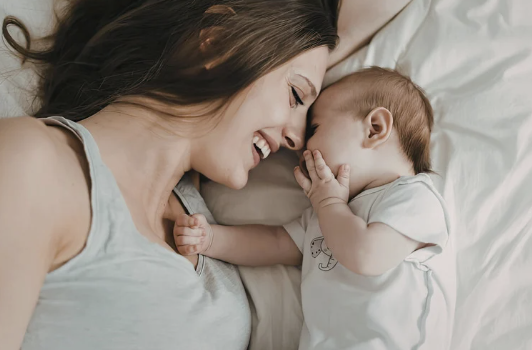
“You are your baby’s safe place, built through love, presence, and connection each day.”
What about crying?
This is where emotions run high, and understandably so.
No loving parent enjoys hearing their baby cry. As a mom of two, I understand firsthand how difficult it can be to hear your child cry. But it is important to separate short-term protest from long-term harm.
Babies cry for many reasons. They cry when they are tired, frustrated, overstimulated, hungry, adjusting, uncomfortable, or moving through change. Crying is communication, but not every episode of crying means damage is occurring.
Context matters. A lot.
A baby being lovingly cared for by familiar caregivers in a safe home, while adjusting to a new bedtime routine, is not the same thing as a baby experiencing chronic neglect or emotional deprivation. Those situations are simply not equivalent. This is what the research supports: short-term tears in a loving home are not the same as true deprivation or neglect.
The cortisol question
One of the most common claims made online and blasted on social media is that sleep training is harmful because crying raises cortisol.
Cortisol is a stress hormone, and yes, babies can have temporary rises in cortisol during distress. But that fact alone does not prove trauma, attachment damage, or long-term harm. The key question is not whether cortisol rises in a moment, but what kind of stress is happening, in what context, for how long, and within what caregiving relationship.
This concern is often repeated online, but the research behind it is more limited than many posts make it sound. By contrast, the randomized Pediatrics trial found no evidence of increased cortisol in infants assigned to graduated extinction or bedtime fading, and no differences in attachment or later emotional and behavioral outcomes.
A 2022 review discussing responsive versus extinction-based sleep approaches also noted how limited the direct cortisol evidence is in this area.
So when the argument becomes, “crying raises cortisol, therefore sleep training is bad,” that skips over the most important scientific point: stress must be interpreted in context.
Why older studies are often misunderstood
This is another place where a lot of confusion comes from.
Many of the studies shared online were not actually studies on sleep training. Some looked at much younger babies in very different stages of development. Others focused more broadly on separation, stress, or caregiver responsiveness. Some even came from settings that look nothing like a loving home with familiar parents.
These studies are still important. They helped us learn a lot about infant development and the value of responsive caregiving. But they do not all apply directly to modern sleep training.
That is why broad claims on social media can be misleading. A thoughtful, age-appropriate sleep plan for an older baby is not the same as chronic unresponsiveness, prolonged separation, or deprivation.
Why orphanage and institutional studies do not apply here
This point is especially important.
Sometimes institutional or orphanage research gets referenced in anti-sleep-training discussions. But those studies involve children who may have experienced chronic deprivation, inconsistent care, rotating caregivers, and a lack of stable attachment figures. That is a completely different context from a baby being raised by loving, familiar parents in a connected home environment. The sleep-intervention studies above do not describe institutional deprivation contexts, and the findings should not be conflated.
Using orphanage research to argue against all sleep training is not an accurate comparison. The emotional and caregiving context is entirely different. What happens in a family working through bedtime support is not comparable to chronic deprivation.
My view on “Cry it Out”
I also think it helps to be very clear about language.
When many people say cry it out, I take that to mean a full extinction method. In that approach, the child is put down and the caregiver does not return during the sleep-learning period.
That is not the approach I personally use with families, but of course, I do not judge any families that choose this path!
At Harbor Light, my work is centered on responsive, developmentally appropriate sleep support. I look at the whole picture: your child’s age, temperament, feeding needs, current patterns, your comfort level, and what will feel both effective and emotionally manageable for your family.
That does not mean there is never any crying. Change can come with protest. But there is a meaningful difference between short-term tears within a supported plan and a fully hands-off extinction approach. The sleep literature includes multiple behavioral approaches, not just extinction.
Will my baby stop seeing me as their safe place?
This is such a tender fear, and I want to speak to it directly.
A baby does not stop trusting a loving parent because bedtime is hard for a few nights.
Your child’s sense of safety comes from the larger relationship they have with you. It comes from being loved, fed, held, comforted, smiled at, talked to, and cared for over and over again. Secure attachment is built in thousands of moments.
So no, short-term tears during a thoughtful sleep plan do not automatically mean your baby sees you as less safe. A loving parent can support sleep and still be a child’s safe place. Those things can absolutely coexist.
Safe sleep always comes first
Any conversation about sleep training should also include safe sleep.
The American Academy of Pediatrics recommends putting babies on their backs for every sleep, using a firm, flat, non-inclined sleep surface, and keeping loose blankets, pillows, bumpers, and soft objects out of the sleep space. The AAP also recommends room-sharing without bed-sharing, ideally for at least the first 6 months.
A thoughtful sleep plan should also account for feeding needs, reflux or medical concerns, developmental stage, and the child’s overall well-being. Safe sleep is never optional.
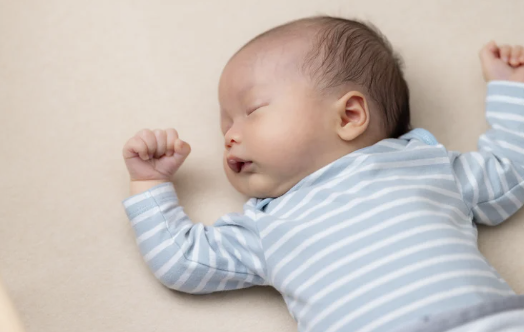
A gentle reminder: safe sleep is the foundation of all healthy sleep support.
Before making changes to sleep routines, make sure your baby’s sleep space is set up according to current safe sleep recommendations. View the AAP’s safe sleep guidance.
So, is sleep training bad?
For most families, the answer is no — not when sleep support is safe, developmentally appropriate, responsive, and thoughtfully guided.
The research does not show that behavioral sleep interventions harm attachment or cause long-term emotional damage. What it does show is that families can support better sleep without sacrificing connection.
Parents do not need fear-based messaging. They need honest, compassionate, evidence-based support.
That is what I believe in, and that is how I approach sleep at Harbor Light.
A gentle note from Harbor Light
If you are feeling torn about sleep training, you are not doing anything wrong. You are likely doing what thoughtful, loving parents do: trying to make the best decision you can with a lot of noise coming at you from every direction.
You do not have to sort through all of that alone.
There is no one-size-fits-all answer, and sleep support should never feel cold or disconnected. My goal is always to help families move toward better sleep in a way that protects connection, respects development, and feels sustainable in real life.
If that is the kind of support you have been looking for, I would be honored to help.
Sources
Gradisar, M., Jackson, K., Spurrier, N. J., Gibson, J., Whitham, J., Williams, A. S., Dolby, R., & Kennaway, D. J. (2016). Behavioral Interventions for Infant Sleep Problems: A Randomized Controlled Trial.Pediatrics, 137(6), e20151486.
Price, A. M. H., Wake, M., Ukoumunne, O. C., & Hiscock, H. (2012). Five-Year Follow-up of Harms and Benefits of Behavioral Infant Sleep Intervention: Randomized Trial.Pediatrics, 130(4), 643–651.
Bilgin, A., & Wolke, D. (2020). Parental Use of “Cry It Out” in Infants: No Adverse Effects on Attachment and Behavioral Development at 18 Months.Journal of Child Psychology and Psychiatry, 61(11), 1184–1193.
Kang, E. K., Kim, S. S., & Song, I. G. (2020). Behavioral Insomnia in Infants and Young Children.Clinical and Experimental Pediatrics, 63(6), 211–220.
Moon, R. Y., Carlin, R. F., & Hand, I. (2022). Sleep-Related Infant Deaths: Updated 2022 Recommendations for Reducing Infant Deaths in the Sleep Environment.Pediatrics, 150(1), e2022057990.